
About HDC
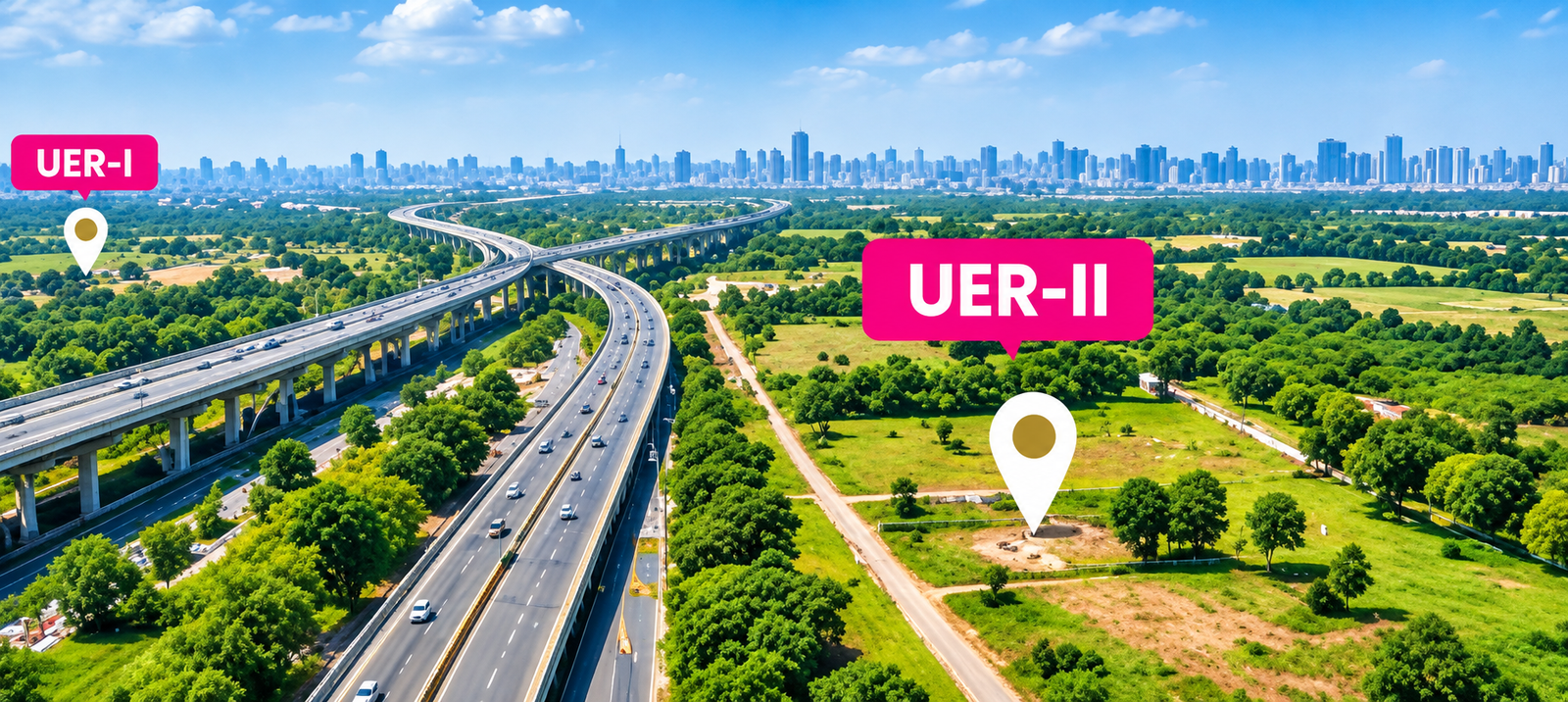
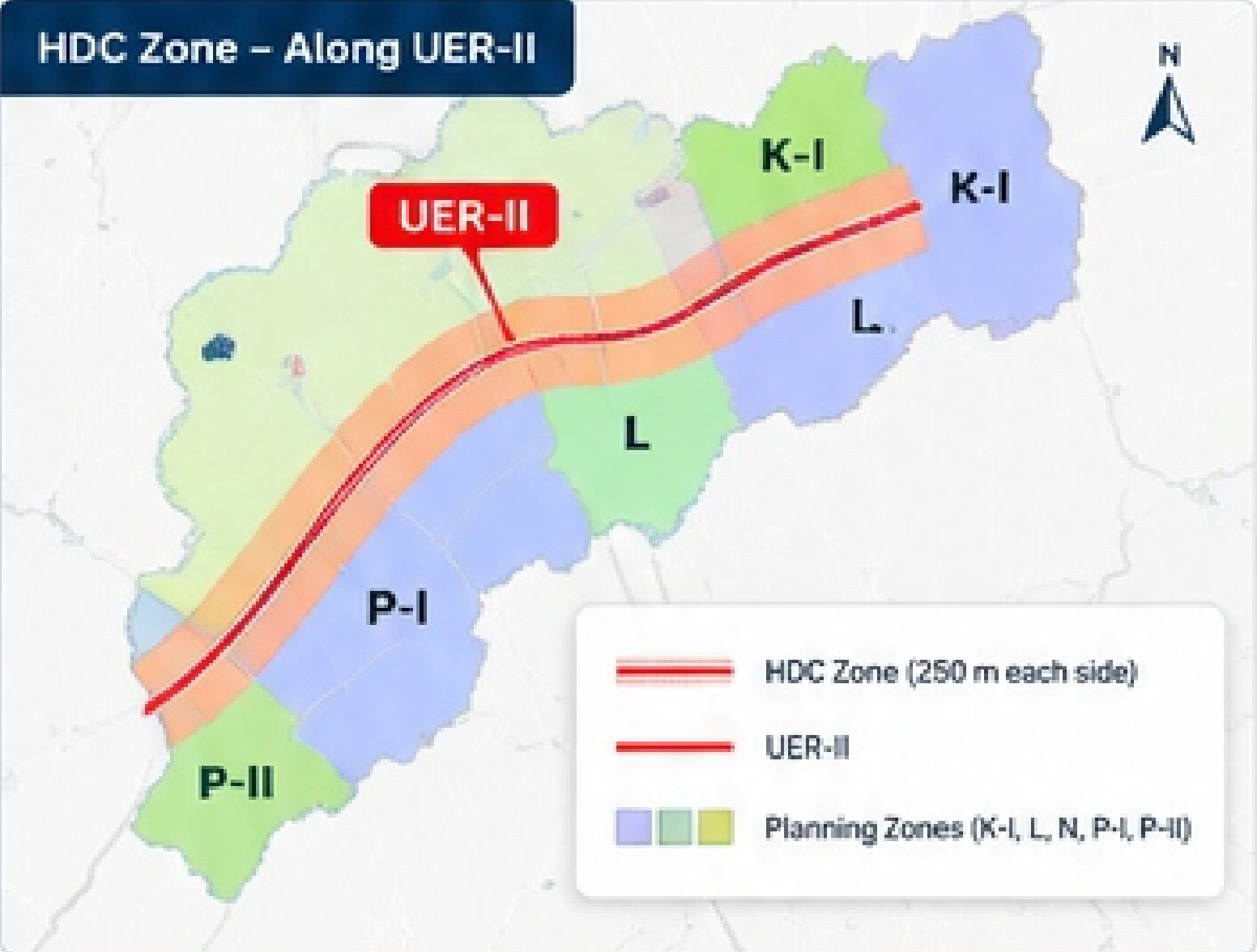
HDC (High Density Corridor) is a 250-metre-wide corridor on either side of UER-II, measured from the edge of the road's Right of Way, subject to the required secondary service road.
It applies in Planning Zones K-I, L, N, P-I and P-II and aims to promote high-density, compact and mixed-use development, including residential, commercial, public/semi-public uses and, in designated areas, warehousing and logistics.
Key Features
Benefits for Landowners
The HDC framework can unlock higher development potential and better returns for eligible land.
FAR up to 400
Higher development intensity for eligible residential, commercial and PSP projects.
Mixed-Use Development
Allows combination of residential and non-residential uses.
UER-II Connectivity
Direct access to a major road corridor with improved connectivity.
Infrastructure Planning
DDA to prepare a Road Network Plan and supporting infrastructure.
Large Development Potential
Eligible plots can be developed at substantially higher density.
Warehousing & Logistics
Certain connected areas can support logistics and warehousing uses.
HDC Eligibility – Key Conditions
Simply owning land near UER-II does not automatically make it an HDC plot.
8,000 sq m
50% surrender
4,000 sq m
HDC vs Land Pooling
Both are part of Delhi's planning framework, but serve different purposes.
| Feature | HDC | Land Pooling |
|---|---|---|
| Focus | High-density development along UER-II | Planned sector development with infrastructure |
| Location | Along UER-II (Zones K-I, L, N, P-I, P-II) | Notified urban extension areas |
| Key Output | Higher FAR, mixed-use, compact development | Integrated planning, roads, parks and utilities |
| Goal | Compact, transit-oriented growth | Sustainable, planned urban development |
🌱 YOUR NEXT STEP
HDC offers a unique opportunity for landowners and investors to be part of Delhi's planned growth. Our team can help you assess eligibility, planning status and land opportunities.
Contact Us Today →For Landowners
Explore development potential, infrastructure benefits and value enhancement.
For Investors
Evaluate opportunities based on zone, sector, title and current DDA records.
What is Land Pooling?
Under the DDA Land Pooling Policy, multiple private landowners voluntarily bring their eligible land parcels together at the sector level.
Instead of developing each parcel separately, pooled land is planned for roads, infrastructure, residential, commercial and public facilities.
DDA describes it as a partnership between landowners, DDA/service agencies and developer entities.
R Zone in Delhi – Important Update
DDA's current Land Pooling Policy is applicable only in the following zones:
How Land Pooling Works
Individual landowners
Eligible land in notified areas
Pool eligible land
At least 70% of developable area
Sector participation
Contiguous land + road access
Consortium / Developer Entity
Formed by landowners
Sector-level planning
By DDA / service agencies
Infrastructure + Development
As per DDA regulations
Potential Benefits for a Landowner
Integrated sector-level planning instead of isolated development.
Roads, parks, utilities and other physical & social infrastructure.
Eligible pooled land can participate in prescribed development framework.
Planned infrastructure may increase land value.
Landowners participate in the development process.
Residential, commercial, social and physical infrastructure planned together.
What Happens to the Pooled Land?
The policy provides a 60:40 framework.
Residential, commercial and public/semi-public uses are planned together with parks, recreational facilities and infrastructure.
For Investors –
Key Things to Verify
Buying land in a Land Pooling zone does NOT automatically mean development or return.
Your Investment Partner
local market knowledge
land opportunities
approach
the transaction process
and due diligence
Let's Find Your Next
Land Investment Opportunity
Contact us today for personalized guidance and the best land options in Delhi.
Get in Touch →☎ +91 98100 00595
Speak with our team regarding your investment requirements.
✉ business@lotuslandrealty.com
Send your requirements and our team will connect with you.